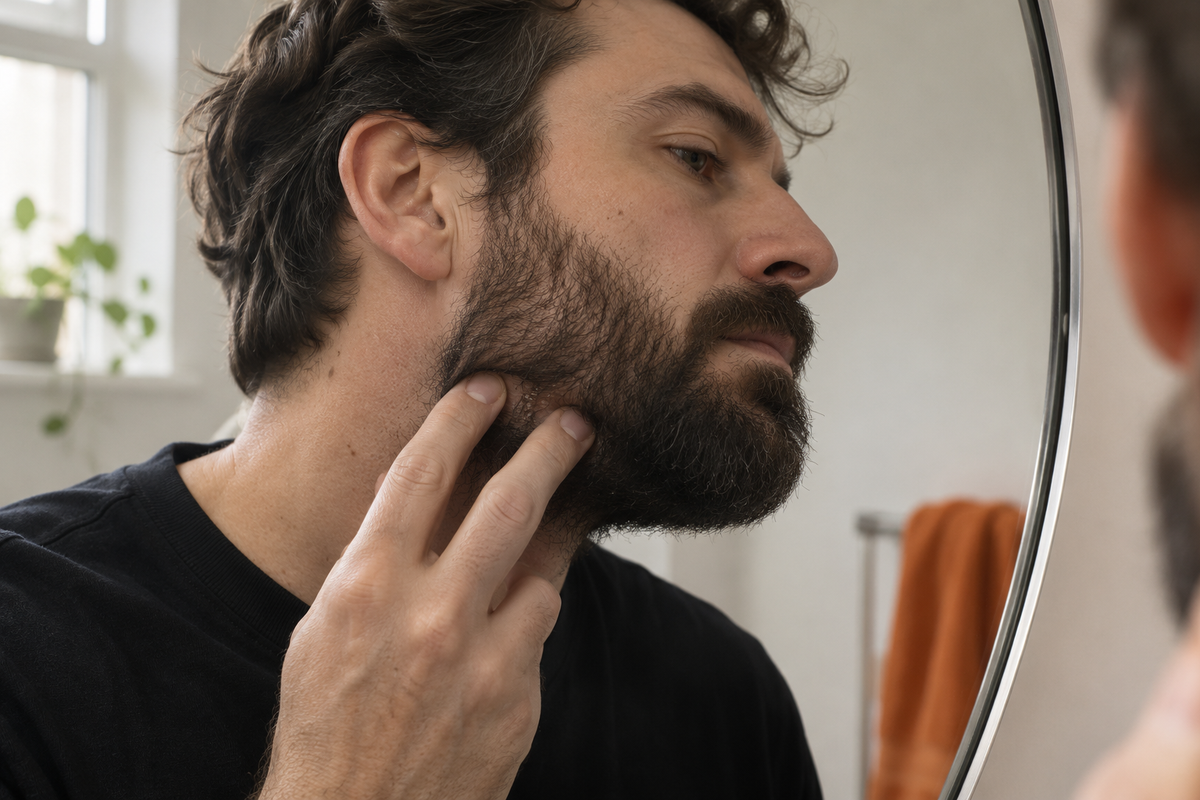
You know the routine. Dark shirt on, quick look in the mirror, a brush of the shoulders on the way out. A few white flakes in the beard, a few more on the shirt by lunchtime. Most men with a beard deal with it at some point, and most of them try the same fixes: more shampoo, more scrubbing, more oil on the hair. None of that goes where the flakes come from.
This guide puts everything in one place: what causes beard dandruff, how dry skin under your beard fits in, and the routine that sorts most of it. Each section links to a more detailed guide if you want to go further.
Where the flakes come from
The flakes in your beard aren't coming from the hair. They're coming from the skin underneath it. Skin sheds all the time. On a bare face, those tiny flakes fall away and nobody notices. Under a beard, the hair catches them, holds them, and lets them go later, usually onto something dark.
When the skin underneath is dry, it sheds more, and in bigger, more visible bits. Add a beard that hides the skin from view, and it's easy to miss the problem until it's sitting on your shoulders. That's why "beard dandruff" is such a common search, and why the answer nearly always starts with the skin, not the hair.
For a shorter introduction, read beard dandruff: what to do about the flakes.
What dries out the skin under a beard
A few everyday things do most of the damage, and they tend to stack up.
- Hot showers. They feel good and strip the skin's natural oils with them.
- The wrong wash. Shampoo or shower gel through the beard can leave the skin underneath tight and dry.
- Nothing reaching the skin. Moisturiser stops at the beard line. Oil gets smoothed over the hair and never gets further.
- Scrubbing at flakes. Rubbing harder when you spot them makes the skin rougher, not clearer.
- Weather and heating. Cold air outside, dry heated air inside.
- Towel habits. A hard rub with the towel takes a layer of skin with it.
Dry skin or beard dandruff?
People use "beard dandruff" for any flakes in a beard. A lot of the time, those flakes are dry skin. Sometimes they're something else, and it helps to know which you're dealing with.
Signs it's mostly dry skin: small, white, powdery flakes; skin that feels tight after washing; worse in winter or after long, hot showers; an itch rather than soreness; things ease when you wash more gently and moisturise the skin underneath.
Signs it could be something else: larger flakes that look greasy or yellowish; red or sore skin underneath; flaking round your nose, eyebrows or scalp as well; an itch that won't settle however gentle your routine is.
Our guide to beard dandruff or dry skin goes through the differences in more detail.
The routine that reaches the skin
There are three steps, and none of them takes long. The point of all three is the same: look after the skin underneath, not just the hair you can see.
- Wash gently
Use lukewarm water and a gentle wash, and keep strong shampoo off your face. Work your fingertips under the hair and onto the skin, rather than just lathering the outside. Rinse until the water runs clear, then pat dry with a clean towel. Don't rub.
Most men don't need to wash their beard with a product every day. Water on the other days is often plenty. Our guide to how to wash your beard goes through it step by step, and how often should you wash your beard covers the frequency question.
- Scrub once or twice a week
Flakes get trapped in a beard, and an everyday wash doesn't always shift them. That's the job of an exfoliating wash. The Beard Scrub Bar is a cleansing bar with pumice, shea butter and sandalwood extract. It cleans the beard and the skin underneath and clears loose flakes.
Use it once or twice a week. Wet your beard with warm water, lather the bar, then massage the lather into the skin beneath your beard in small circles. Let the pumice do the work; there's no need to press hard. Rinse well. More scrubbing isn't better: daily exfoliating is more likely to leave the skin tight. The full method is in how to exfoliate your beard without overdoing it.
- Oil the skin, not just the hair
This is the step most men get wrong. Oil smoothed over the outside of a beard conditions the hair and leaves the skin untouched. The skin is the part that's flaking.
Druff Anti Dandruff Beard Oil moisturises the skin beneath your beard and conditions the hair on top. Best applied after a shower or a wash with warm water, while your skin and beard are still slightly damp. Warm the oil between your palms before applying. Warm the oil between your palms before applying. Use your fingertips to work it into the skin underneath, covering the whole beard area, then smooth what's left through the hair. Morning and evening.
Start with a small amount and add a little more only if you need it. How much depends on your beard, and we've covered that in how much beard oil should you use. For the hands-on technique, read how to apply beard oil to a short beard. If you want to know what's in the bottle, it's all in what's in Druff Anti Dandruff Beard Oil.
Finish with a brush
A Boar Beard Brush works the oil through the hair and lifts loose flakes out. Use light strokes in the direction your beard grows, and don't dig into the skin. It's the finishing step, not a replacement for your fingertips. More in do beard brushes help with flakes.
How it fits into a normal morning
None of this needs a bathroom full of products or an extra ten minutes. On most days, it's a warm shower, a rinse through the beard with your fingertips, a pat dry and oil worked into the skin before you get dressed. That's a couple of minutes. In the evening, it's the oil again, on its own or after a wash.
Once or twice a week, the Beard Scrub Bar goes in at the shower stage, and the rest stays the same. Keep the oil next to your toothbrush rather than at the back of a cupboard, so it's in front of you when you need it. The routine that works is the one you'll still be doing in a month.
Will beard oil help with beard dandruff?
When the flakes come from dry skin under your beard, yes, it can help, because it moisturises the skin that's doing the flaking. It won't sort every cause, and it only works if it reaches the skin. Our guide will beard oil help with beard dandruff? goes into the detail. If you're weighing up oil against cream, read beard oil vs moisturiser.
Habits that keep the flakes coming
Plenty of beard dandruff comes back because of small habits rather than the wrong product. The usual ones:
- Scratching. It roughens the skin and loosens more flakes.
- Picking flakes out by hand instead of letting the wash and brush do it.
- Hot showers every morning, with the beard under the spray the whole time.
- Washing the beard with whatever's in the shower, every day.
- Oil on the hair only, because that's the part you can see.
- An on-off routine. Oil for a week, nothing for a fortnight, then a new product.
Read dry skin under your beard? 7 habits to rethink for the full list, and why is my beard dandruff so bad if the flakes keep coming back.
Winter and the seasons
If your beard dandruff gets worse from October onwards, you're not imagining it. Cold air outside and central heating inside both dry skin out, and most men take longer, hotter showers when it's cold. All three land on the skin under your beard at once.
The routine doesn't change much. Turn the shower down a notch, keep the wash gentle, and be consistent with oil morning and evening. Our guide to dry skin under your beard in winter covers the colder months in more detail.
Summer has its own version: sweat, sun cream and more washing. The same rules apply. Rinse well, wash gently, and keep getting moisture to the skin.
Short beards and long beards
Stubble. There's not much hair to condition, and a face moisturiser often spreads more easily than oil. Beard oil vs moisturiser covers which suits you.
Short beards. This is where oil earns its place. The skin is easy to reach, so a small amount worked in with your fingertips covers it well.
Longer beards. The hair takes more product, and the skin is harder to reach. Part the beard with your fingers as you work the oil in, and focus on the skin first. Then use what's left, plus a little more if needed, for the length. A brush helps get it to the ends.
A new beard comes with its own itch in the first few weeks. That's covered in new beard itch: getting through the first weeks. For an itch that sticks around, read itchy beard: why it happens and what helps.
The moustache and the edges
Two areas get missed more than any other. The first is the moustache. The skin under it is face skin, it gets plenty of wear from food, drink and wiping your mouth, and it's often skipped when oil goes on. Flakes there are also the hardest to ignore. Use less oil than you think, press it into the skin above your lip, and keep it off your lips. The full routine is in moustache dandruff: why it happens and what to do.
The second is the edges: the cheek line and neck you shave to keep the beard tidy. Shaving takes a thin layer off the skin's surface, and the skin just inside the beard line gets missed. After shaving, oil the skin under the beard and use a moisturiser on the freshly shaved skin. More in dry skin after shaving.
When it isn't just dryness
Greasy or yellowish flakes, red or sore skin, an itch that won't settle, or flaking round your nose, eyebrows or scalp as well can be a skin condition such as seborrhoeic dermatitis rather than plain dryness. The two can look alike and they can overlap. Stop using anything that stings.
Common questions
Is beard dandruff the same as dandruff on your head?
The flakes look similar, but they don't always have the same cause. A lot of beard dandruff is dry skin under the beard. Don't assume a scalp product is right for your face.
Will shaving it off get rid of beard dandruff?
It makes the skin easier to see and reach. It doesn't change why it was flaking, and you don't have to shave to look after the skin under a beard.
Can I use normal shampoo on my beard?
Many shampoos are made for the scalp and can be harsh on face skin. A gentle wash suits the skin under your beard better. How often should you wash your beard? covers this.
Should I put oil on in the morning or at night?
Both. Morning and evening, after a warm shower or wash, while your skin and beard are still slightly damp.
Why does my beard oil feel greasy?
Usually too much, sitting on the hair. Start with a small amount, warm it between your palms and work it into the skin underneath, then smooth what's left through the hair.
Which oil is best for beard dandruff?
One you can work into the skin underneath, with an ingredient list you can read. Our guide to coconut oil, tea tree or jojoba for beard dandruff looks at the options honestly.
Do I need every product?
No. Start with the step you're missing. For most men, that's getting oil to the skin. Add the scrub once or twice a week if flakes are stuck in the hair, and the brush if you want it tidy.
How long until I notice a difference?
Everyone's skin is different, so there's no set timeline. Keep the routine consistent for a few weeks before you judge it, and change one thing at a time.
The short version
- Beard dandruff comes from the skin under your beard, not the hair.
- A lot of it is dry skin. Some of it is something else.
- Wash gently with lukewarm water and your fingertips under the hair.
- Beard Scrub Bar once or twice a week to clear trapped flakes.
- Oil into the skin first, then through the hair, morning and evening.
- Don't forget the moustache and the edges.
- Stop scratching, and give one routine a fair go.
Further reading
- Beard dandruff or dry skin?
- Common beard problems
- Dry skin on your face
- NHS guidance on dandruff