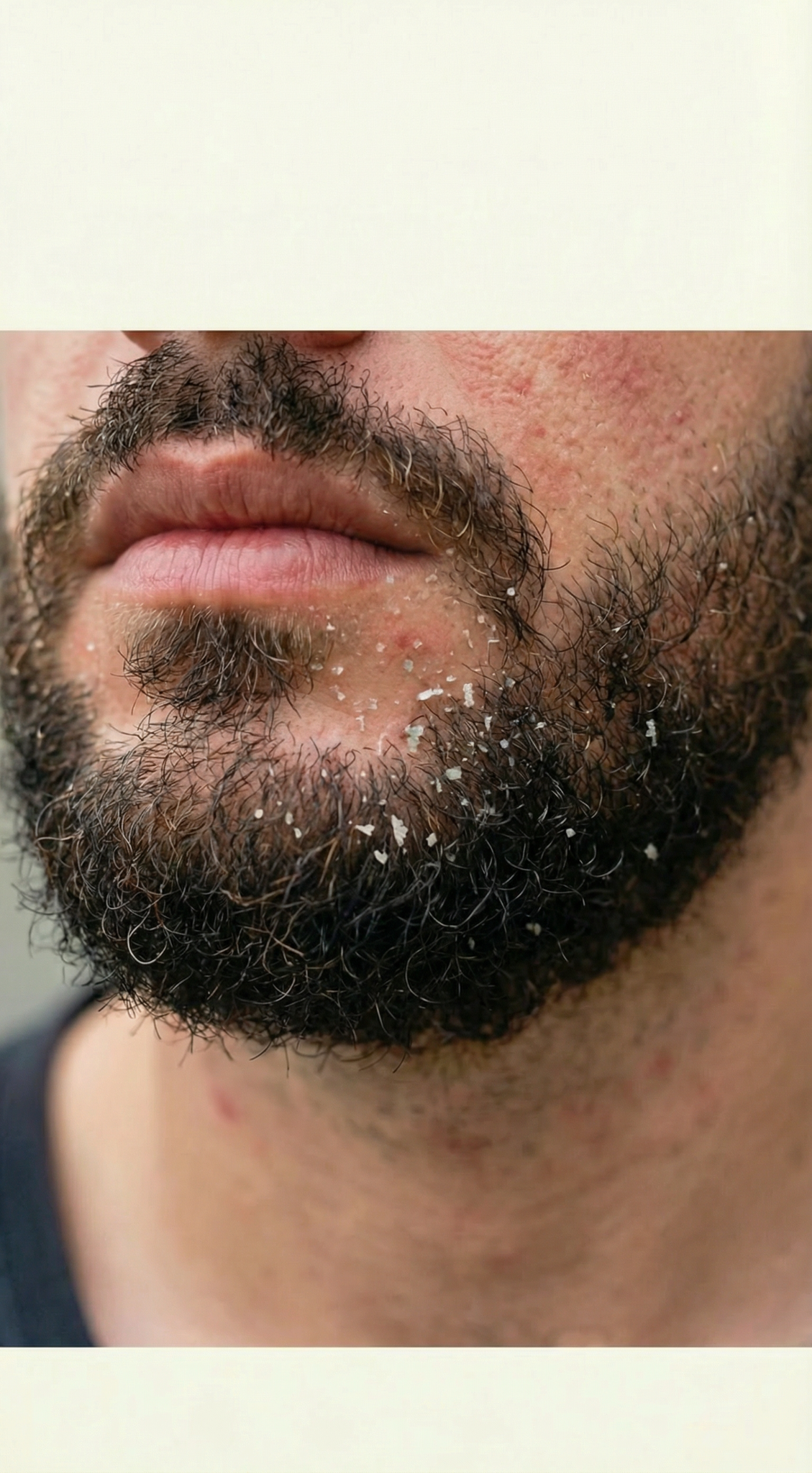
The flakes you see in your beard come from the skin underneath. For everyday dryness, gentle washing and moisturising that reaches the skin are the useful starting points.
Start underneath the beard.
It's easy to give the hair all the attention. You wash it, brush it and check the shape in the mirror, while the skin beneath can stay dry and uncomfortable.
Notice when the flakes appear. Tightness after washing can point you towards your cleansing and moisturising habits. Persistent red or sore patches need a closer look. The appearance of a flake alone can't tell you its cause.
Want everything in one place? Read the complete guide to beard dandruff and dry skin.
What Druff brings to the routine.
Druff Anti Dandruff Beard Oil is the one we sell now. It's designed to moisturise the dry skin beneath your beard and condition the hair, helping with dry-skin flakes and a coarse-feeling beard in one grooming step.
A straightforward routine for dry skin.
Best applied after a shower or a wash with warm water, while your skin and beard are still slightly damp. Warm the oil between your palms before applying. Use your fingertips to work it into the skin underneath, covering the whole beard area, then smooth what's left through the hair. Morning and evening. The short-beard guide shows how.
Use the Beard Scrub Bar once or twice a week. The beard-washing guide explains how to fit that separate step into the routine.
What should you look for?
Pay attention to how the skin feels as well as how the hair looks: less dryness, a softer beard and a finish that feels comfortable. Consistent application makes it easier to judge the routine than changing several products at once.
Start with a small amount and let it spread before adding more. Our short-beard application guide shows the skin-first technique.
When flakes need another kind of care.
Beard flaking can also be linked to irritation or a condition such as seborrhoeic dermatitis.
For ordinary under-beard dryness, a clear routine is a good place to start. You can see the current formula and directions on the Anti Dandruff Beard Oil page.
What do beard flakes actually mean?
Beard dandruff is a useful everyday description for flakes showing up in your beard or on your clothes. It isn't a diagnosis. The flakes come from the skin underneath, and dryness is one possible explanation. Irritation and skin conditions can also cause flaking, so a bottle of oil isn't the answer to every beard problem.
Think about what you're noticing alongside the flakes. Is your skin feeling tight after washing? Has your shower become hotter, or have you changed products? Those details can help you review your routine. They can't tell you for certain what's causing the problem. Persistent redness, soreness or itching isn't something to keep experimenting on.
Winter can also change how your skin feels. If the problem seems worse during colder months, read our guide to dry skin under your beard in winter. Keep the response simple: gentle washing and care that actually reaches the skin, rather than extra scrubbing whenever you spot a flake.
Make washing a useful step
A beard can make it easy to concentrate on the hair and forget the surface beneath it. Wash with warm water and work gently through the beard, then rinse properly. Water that's uncomfortably hot and repeated rubbing aren't a better clean. Pat away excess water rather than scrubbing with a towel.
Use the Beard Scrub Bar once or twice a week. You can lather it in your hands before working the lather onto your beard and the skin underneath. Keep pressure light and rinse thoroughly. This is a washing and physical exfoliation step, not something to repeat every time flakes appear. If it irritates your skin, stop using it.
After a warm shower or wash, leave the skin and beard slightly damp. Warm Anti Dandruff Beard Oil between your palms before massaging it into the skin first, then work the remainder through the hair. The full technique lives in our short-beard application guide. You don't need to turn every wash into a longer routine.
Common questions about beard dandruff
Is it the same as dandruff on my scalp? Flaking can affect both areas, and some skin conditions can affect more than one part of the body. But similar-looking flakes don't confirm the same cause. Don't assume that the product you use on your scalp is automatically suitable for your face.
Would shaving get rid of it? It makes the skin easier to reach. It doesn't change why it's flaking. You don't have to shave simply to apply care beneath a beard.
Can I use ordinary shampoo? Check whether the product is intended for facial use and how your skin responds. A harsh wash can leave the area feeling uncomfortable. A medicated scalp shampoo isn't an everyday beard wash.
For the habits worth checking before buying more products, see 7 beard-care mistakes to check for dry skin. Change one manageable part of your routine at a time. That makes it easier to notice what feels comfortable and what doesn't.